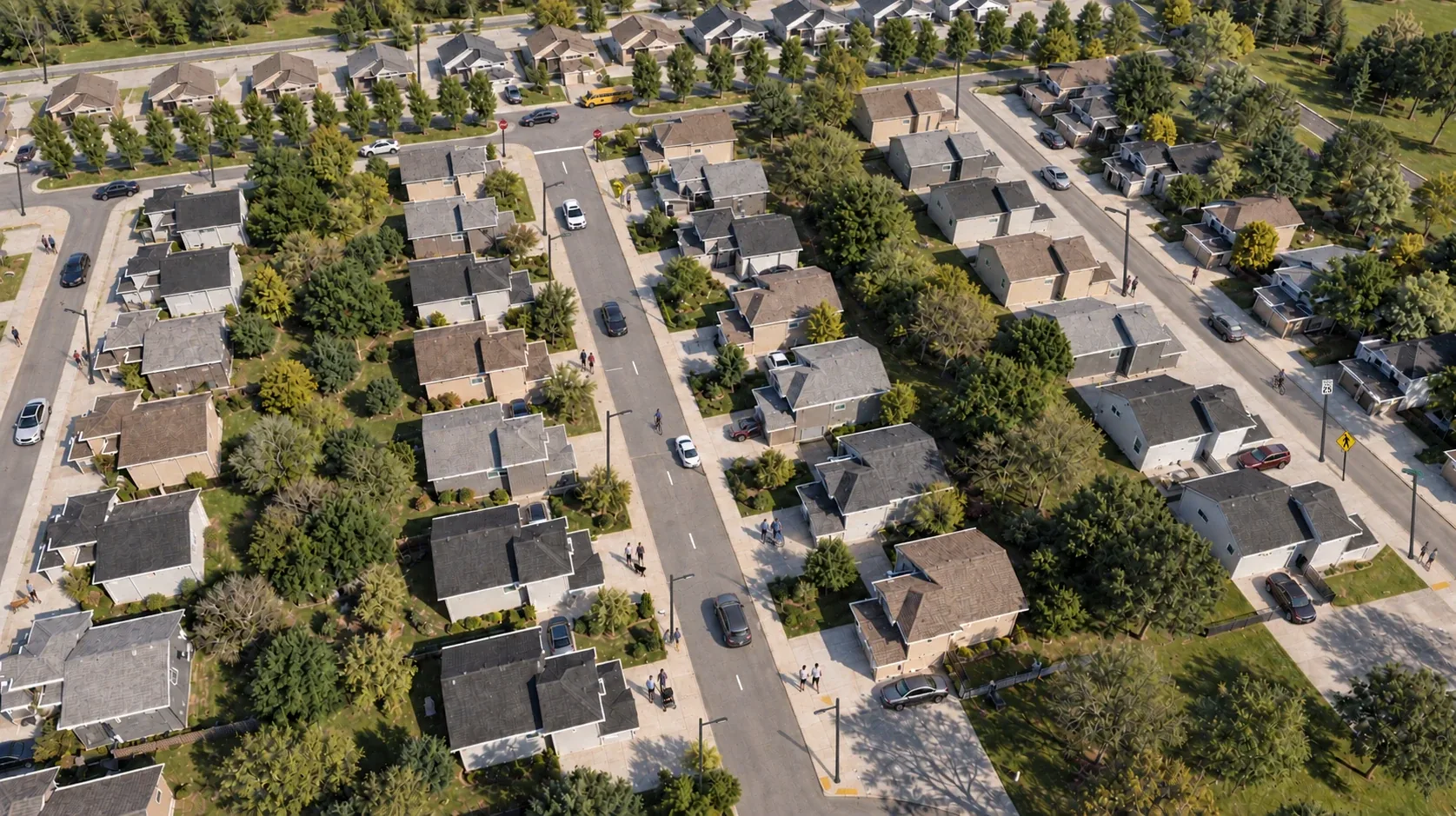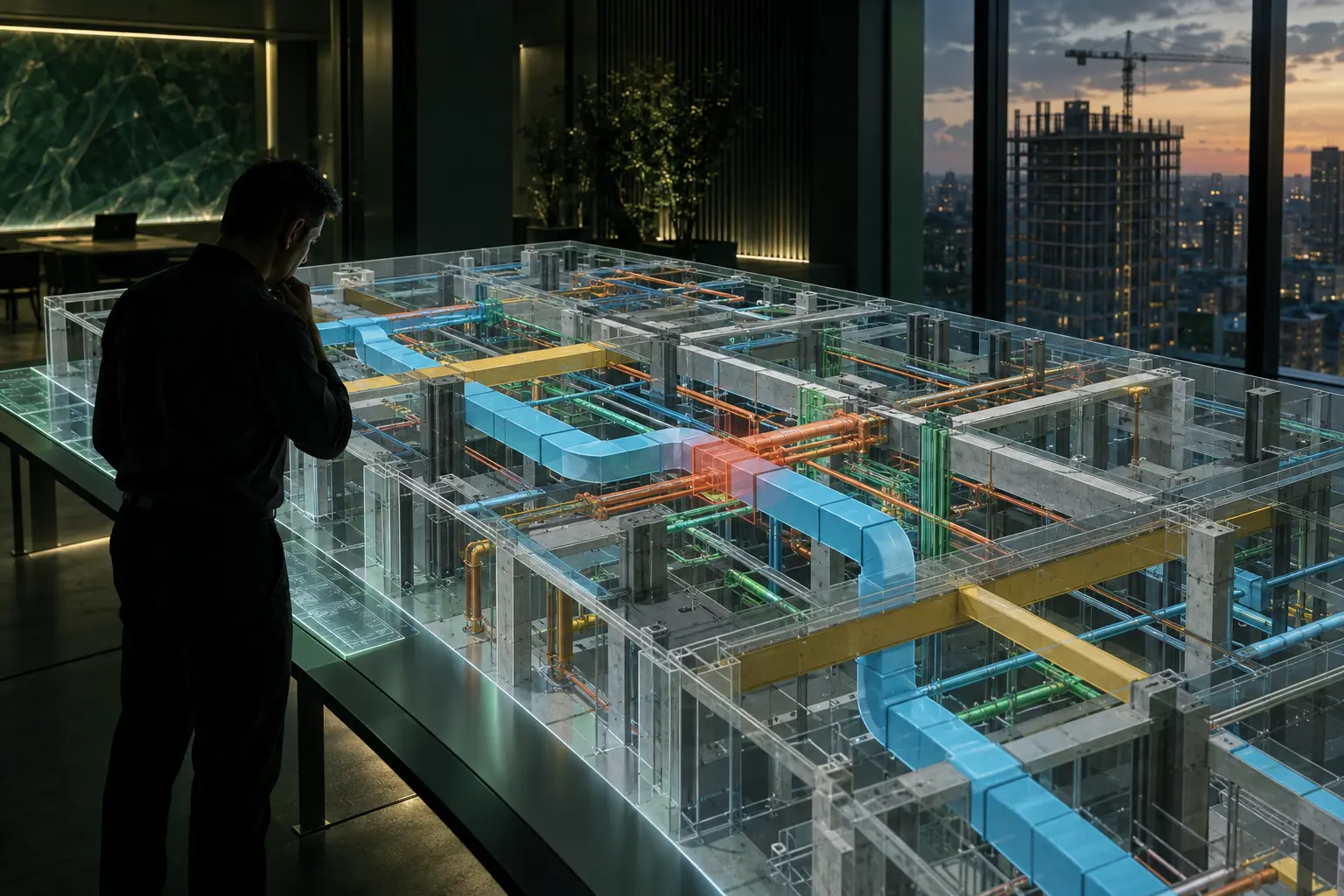
Project information usually arrives in pieces: drawings, models, product data, issue logs, schedules and decisions held in separate tools. A digital twin brings the relevant parts together around the physical reality of a project, so the team can see a condition, understand its context and act with confidence.
A twin is not simply a 3D model
A coordinated BIM model is an important starting point, but a digital twin becomes useful when it connects geometry to the information and questions that change project outcomes. It can relate an area of the building to its discipline models, approved decisions, assets, construction status, maintenance records or performance data.
That connection changes the role of the model. Instead of being a file used only by specialists, it becomes a navigable working environment for project managers, consultants, owners and field teams.
Start with the decisions the team needs to make
The most valuable twin is designed around real workflows, not around a technology checklist. Before adding data, identify the recurring questions that delay action: Where are the unresolved coordination interfaces? Which spaces are affected by a change? What has been approved, installed or handed over? Who owns the next decision?
With those questions defined, the twin can surface the right information without overwhelming the team with every available data point.
- Map the decisions that create delay or risk.
- Connect only the information needed to explain those decisions.
- Assign clear owners and status to open items.
- Keep the visual context aligned with the latest coordinated model.
Make coordination visible and traceable
Coordination meetings move faster when everyone can review the same spatial condition. A twin makes it possible to isolate systems, compare design alternatives and document the decision in the place where the issue occurs. It also preserves a clearer record of why a change was made and what it affects.
This is especially useful where architecture, structure and MEP systems meet. A model can reveal a conflict; the twin adds the surrounding evidence, responsibility and decision history needed to resolve it without losing context.
Support the project beyond design
As a project moves into construction and operation, the same environment can support progress review, quality checks, client walkthroughs and asset handover. The information does not need to be static. New site conditions, approved substitutions and operational records can be connected over time as the use case requires.
The goal is continuity: fewer disconnected handoffs and a more useful record of the building as it becomes real.
Build a useful first version
A digital twin does not need to begin as an all-encompassing platform. Start with one high-value workflow, a coordinated source model and a small set of reliable data connections. Prove that it shortens a decision cycle or improves project visibility, then extend it to the next need.
When the visual system, model coordination and project information are developed together, the result is a working asset—not another destination where information goes to be stored.